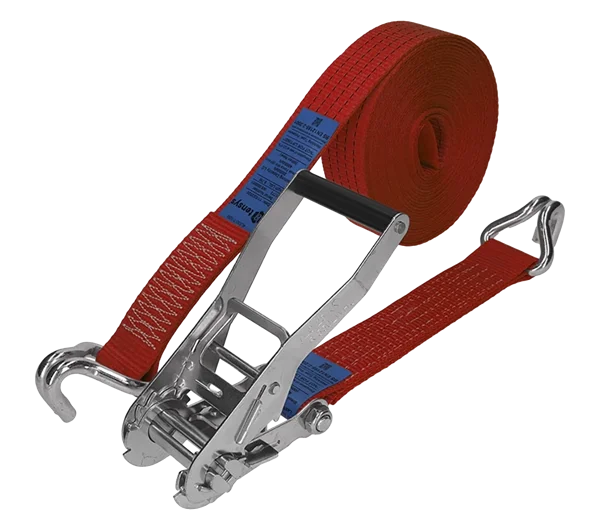
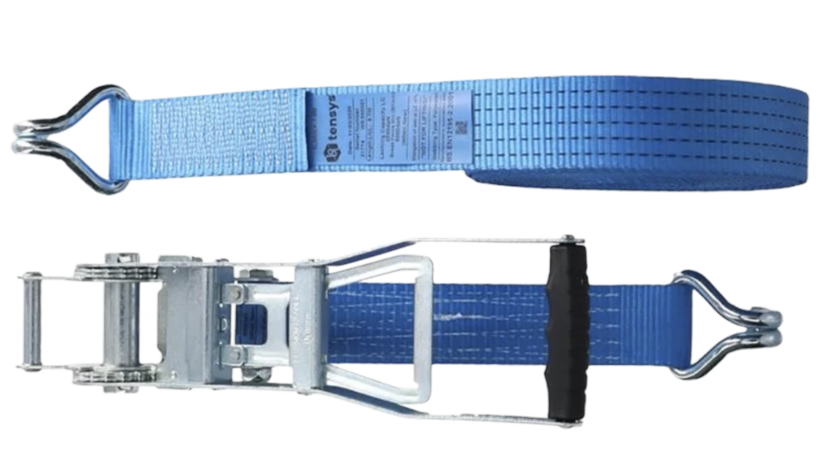
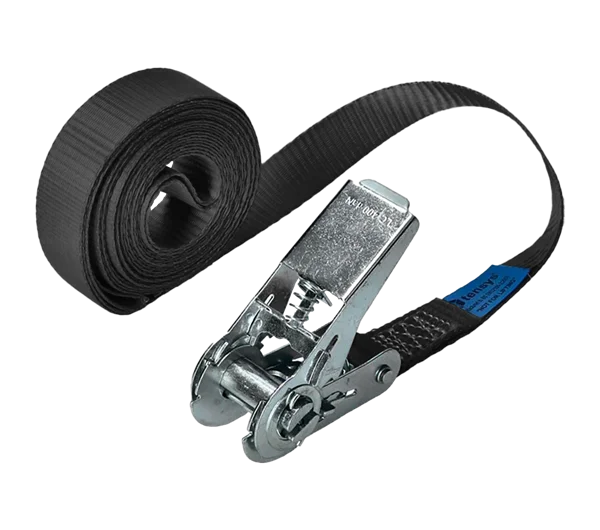
Ratchet buckles are a simple mechanism but aren't maintenance free.
Maintaining ratchet buckles properly ensures they stay safe, functional, and long-lasting.
Here's a straightforward guide to help you keep them in good condition:
1. Regular Cleaning
-
After use, especially in dirty or wet environments, clean the buckle and strap.
-
Use warm water and mild soap to remove dirt, grease, or salt.
-
Avoid harsh chemicals that could degrade the metal or strap material.
-
Dry thoroughly to prevent rust or mildew.
2. Lubrication
-
Apply a light lubricant (like WD-40DRY, PTFE or silicone spray) to the moving parts of the ratchet mechanism.
-
Wipe off excess to avoid attracting dust and debris.
-
Do this periodically or if the ratchet feels stiff.
3. Inspection
-
Check for fraying, cuts, or excessive wear on the strap.
-
Inspect the ratchet teeth and handle for damage or deformation.
-
Ensure the release mechanism works smoothly.
4. Storage
-
Store in a dry, cool place away from direct sunlight.
-
Avoid leaving them exposed to the elements for long periods.
-
Coil the straps neatly to prevent tangling or creasing.
5. Usage Tips
-
Don't over-tighten as this can damage both the buckle and the cargo.
-
Always align the strap properly in the ratchet to avoid jamming.
-
Use the correct strap rating for the load you're securing.
Feel free to get in touch if you have any questions about how to look after your Tensys ratchet straps. You may also want to download our handy maintenance checklist and log (PDF opens in new window).
Buy Ratchet Straps from Tensys Direct
SHORT ANSWER: No, you cannot use ratchet straps for lifting. Ratchet straps are designed to secure loads in place during transport; they are not designed, tested or certified for lifting applications.
Ratchet straps can be extremely useful if you're trying to stop cargo shifting around while you're on the road, but they are not lifting slings and should not be used as such.
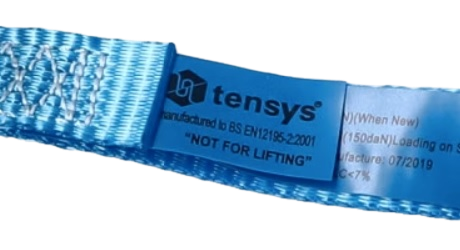
Every Tensys ratchet strap has the words NOT FOR LIFTING printed clearly on the label. This warning is there for a very good reason: using a ratchet strap to lift or lower a load may cause the strap to fail, potentially causing severe damage and/or injuries.
If you need to lift a load, you must use suitable lifting equipment such as a certified lifting sling. Luckily, we also sell textile lifting slings that are specifically made for heavy lifting jobs.
If you've ever looked closely at one of our ratchet strap labels, you may have spotted the term BFmin. This is short for minimum breaking force – a very important measurement, and one that's often misunderstood.
Basically, the minimum breaking force is your brand new ratchet strap's absolute limit. If the strap is subjected to forces equalling or exceeding the BFmin, the strap will fail.
BFmin should not be confused with the strap's lashing capacity (LC), which refers to the maximum force your ratchet strap is designed to sustain in actual working conditions.
Read on to learn more about BFmin and what it actually means in relation to our ratchet straps.
An endless ratchet strap is a type of lashing strap that forms a continuous loop around your load instead of terminating in a hook or other endfitting.
Storing your ratchet straps correctly is crucial if you want to prevent premature wear and minimise the risk of a dangerous accident caused by a strap failing.
Every Tensys ratchet strap has a label with lots of numbers and technical jargon on it. Some of these terms can be a bit confusing if you're not familiar with them, so we've put together this handy infographic to help you read and understand the information on your ratchet strap's label.
Ratchet straps are great for securing loads during transportation. Their design combines a sturdy textile strap (usually made of polyester webbing) with a powerful ratcheting mechanism that applies and retains tension in the strap. This type of lashing strap is commonly used on trucks, vans and trailers to prevent cargo from moving around.