
Tensys
Your Basket
YOUR BASKET

You have no items in your basket

Author: joel

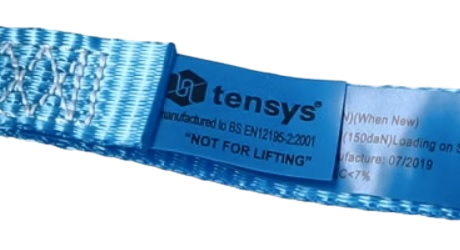
Tensys ratchet strap label with 'NOT FOR LIFTING' warning

SHORT ANSWER: No, you cannot use ratchet straps for lifting. Ratchet straps are designed to secure loads in place during transport; they are not designed, tested or certified for lifting applications.

Ratchet straps can be extremely useful if you're trying to stop cargo shifting around while you're on the road, but they are not lifting slings and should not be used as such.

Every Tensys ratchet strap has the words NOT FOR LIFTING printed clearly on the label. This warning is there for a very good reason: using a ratchet strap to lift or lower a load may cause the strap to fail, potentially causing severe damage and/or injuries.

If you need to lift a load, you must use suitable lifting equipment such as a certified lifting sling. Luckily, we also sell textile lifting slings that are specifically made for heavy lifting jobs.
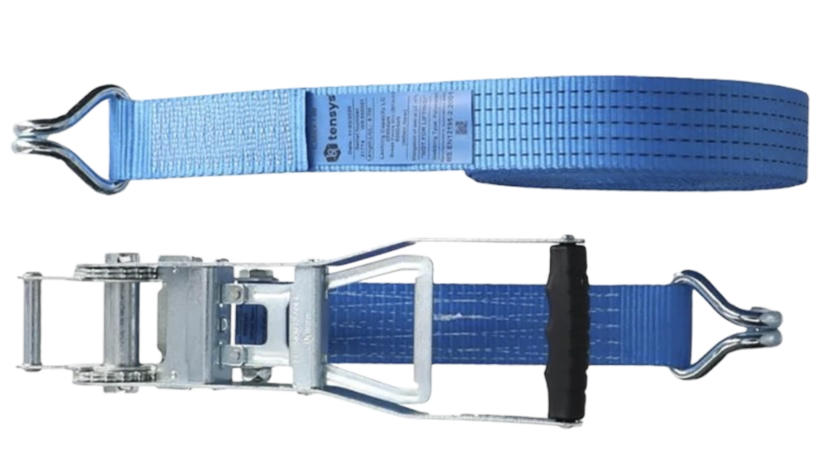
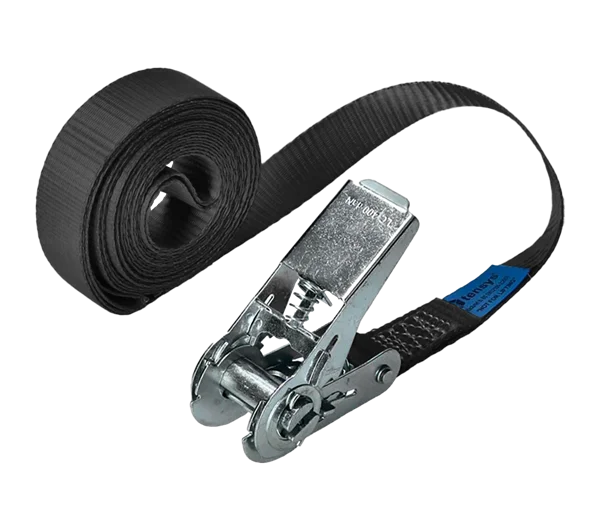
Tensys ratchet strap

If you've ever looked closely at one of our ratchet strap labels, you may have spotted the term BFmin. This is short for minimum breaking force – a very important measurement, and one that's often misunderstood.

Basically, the minimum breaking force is your brand new ratchet strap's absolute limit. If the strap is subjected to forces equalling or exceeding the BFmin, the strap will fail.

BFmin should not be confused with the strap's lashing capacity (LC), which refers to the maximum force your ratchet strap is designed to sustain in actual working conditions.

Read on to learn more about BFmin and what it actually means in relation to our ratchet straps.

Endless ratchet strap

An endless ratchet strap is a type of lashing strap that forms a continuous loop around your load instead of terminating in a hook or other endfitting.